Educational Activities for Toddlers at Home: A Complete Guide for Smart Parents
Discover the best educational activities for toddlers at home to boost language, motor skills, creativity, and early learning through fun play-based ideas.
BLOG
1/20/20263 min read
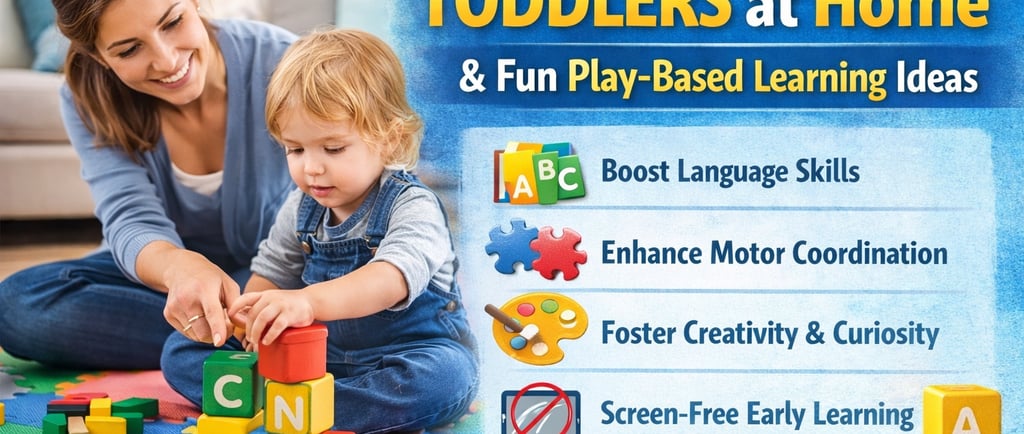
Toddlers are naturally curious, energetic, and eager to explore the world around them. The age between 1 to 3 years is one of the most critical phases of brain development, where simple everyday experiences can shape lifelong learning skills. The good news? You don’t need expensive toys or formal schooling to support your toddler’s learning.
This guide covers educational activities for toddlers at home that are fun, affordable, developmentally appropriate, and highly effective.
Why Educational Activities Matter for Toddlers
During toddlerhood, the brain forms millions of neural connections every second. Educational activities help toddlers:
Develop language and communication skills
Improve fine and gross motor coordination
Build emotional and social awareness
Strengthen memory and attention span
Learn problem-solving through play
Most importantly, learning through play helps toddlers enjoy the process, making education a positive experience from the very beginning.
Key Principles of Toddler Learning at Home
Before diving into activities, keep these principles in mind:
Short attention spans: Activities should be 5–10 minutes long
Repetition is powerful: Toddlers learn by doing things again and again
Play-based learning works best
Interaction matters more than perfection
Everyday moments are learning opportunities
1. Language and Communication Activities
Talking Throughout the Day
Narrate your actions:
“We are washing hands.”
“This apple is red and round.”
This constant exposure improves vocabulary and comprehension.
Reading Picture Books
Choose books with:
Large pictures
Few words
Repetitive phrases
Ask simple questions like, “Where is the dog?” and let your toddler point.
Rhymes and Songs
Nursery rhymes improve:
Memory
Pronunciation
Rhythm and listening skills
Singing with actions makes learning even more effective.
2. Fine Motor Skill Activities
Fine motor skills involve small muscle movements, especially hands and fingers.
Finger Play
Activities like:
Clapping
Finger rhymes
Opening and closing fists
Strengthen hand coordination.
Stacking and Sorting
Use:
Blocks
Cups
Rings
Let toddlers stack, knock down, and rebuild—this supports hand-eye coordination.
Scribbling Time
Offer crayons and thick pencils. Scribbling is an early step toward writing and creativity.
3. Gross Motor Skill Activities
Toddlers need movement to develop strength and balance.
Indoor Movement Games
Walking along a line on the floor
Crawling under chairs
Rolling a ball back and forth
Action Songs
Songs with movements like jumping, bending, and spinning help improve coordination.
4. Sensory Play Activities
Sensory play stimulates the senses—touch, smell, sight, sound, and taste.
Texture Exploration
Create a sensory box with:
Rice
Beans
Fabric pieces
Sponges
Let toddlers touch and explore freely.
Water Play
Supervised water activities:
Pouring water between cups
Floating and sinking objects
These build focus and curiosity.
5. Cognitive and Thinking Activities
Simple Puzzles
Large-piece puzzles help toddlers:
Recognize shapes
Solve problems
Improve patience
Color and Shape Recognition
Use everyday items:
“Bring me the red ball”
“Where is the round plate?”
Learning becomes natural when integrated into daily life.
6. Creative Activities for Toddlers
Art Without Pressure
Activities include:
Finger painting
Stamp painting with vegetables
Coloring with crayons
Focus on the process, not the final artwork.
Pretend Play
Pretend kitchens, dolls, or toy animals help toddlers:
Express emotions
Develop imagination
Practice social skills
7. Everyday Life as Learning Time
Kitchen Learning
Involve toddlers in:
Washing fruits
Sorting vegetables
Naming utensils
Household Tasks
Simple tasks like:
Putting toys away
Matching socks
Wiping surfaces
Teach responsibility and independence.
8. Emotional and Social Development Activities
Naming Emotions
Use phrases like:
“You look happy.”
“You are feeling upset.”
This helps toddlers understand and express feelings.
Turn-Taking Games
Rolling a ball or stacking blocks together teaches sharing and patience.
9. Screen-Free Learning Activities
Limiting screen time encourages:
Better focus
Stronger imagination
Active learning
Opt for:
Storytelling
Music
Physical play
Screens should never replace real interaction.
Sample Daily Learning Routine for Toddlers
Morning
Songs and movement
Picture book reading
Afternoon
Sensory play
Fine motor activity
Evening
Pretend play
Storytime
Keep routines flexible and pressure-free.
Common Mistakes Parents Should Avoid
Overloading with activities
Comparing your child to others
Expecting academic results too early
Using worksheets excessively
Replacing play with screens
Toddlers learn best when they feel safe, loved, and encouraged.
Benefits of Home-Based Learning for Toddlers
Educational activities at home:
Strengthen parent-child bonding
Support personalized learning pace
Reduce learning anxiety
Build confidence and curiosity
Your presence matters more than any learning material.
Educational activities for toddlers at home are not about early academics—they’re about nurturing curiosity, confidence, and foundational skills. Through play, conversation, movement, and everyday moments, you can give your toddler a strong start in life.
Remember: consistent love, interaction, and play are the best teachers.
CONTACT US
WORKING HOURS
Monday - Friday
9:00 - 18:00