What Is Early Childhood Education & Why It Matters?
What is early childhood education and why is it important? Learn how early learning shapes brain development, confidence, and lifelong success in children.
BLOG
1/20/20262 min read
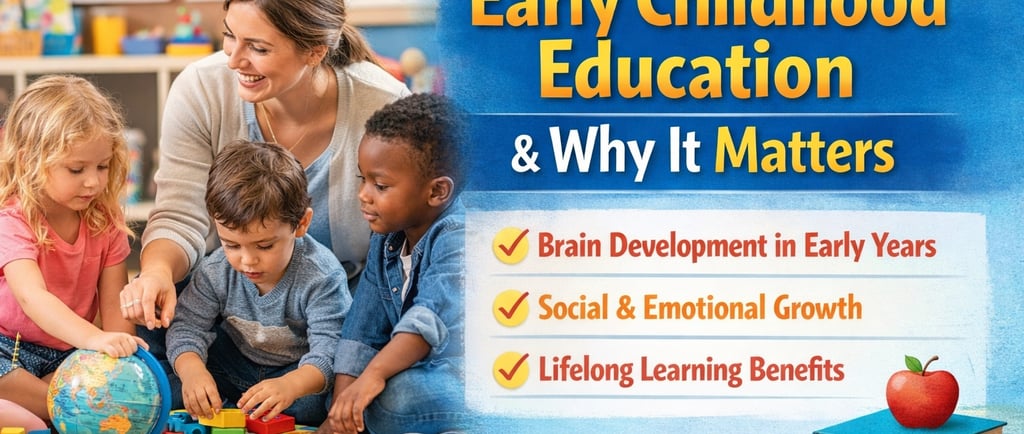
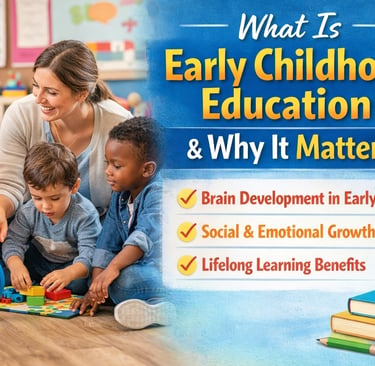
Early childhood education (ECE) lays the foundation for a child’s lifelong learning, behavior, and health. The first few years of life are when a child’s brain develops the fastest, making early learning experiences critical for future success.
In this article, you’ll understand what early childhood education is, why it matters, and how it shapes a child’s academic, emotional, and social development.
What Is Early Childhood Education?
Early Childhood Education refers to structured and unstructured learning experiences provided to children from birth to around 8 years of age. It includes:
Early stimulation at home (ages 0–3)
Preschool and nursery education (ages 3–5)
Kindergarten and early primary grades (ages 5–8)
ECE focuses on learning through play, exploration, communication, and social interaction rather than formal exams or rote memorization.
Why Early Childhood Education Matters
1. Rapid Brain Development
By age 5, nearly 90% of a child’s brain development is complete. Quality early education strengthens neural connections related to:
Language
Memory
Emotional regulation
Problem-solving
Early experiences literally shape how the brain works.
2. Builds Strong Learning Foundations
Children exposed to early education:
Develop better vocabulary and communication skills
Understand basic math and logical thinking earlier
Adapt easily to formal schooling
This reduces learning gaps in later grades.
3. Supports Emotional & Social Growth
Early childhood education helps children:
Express emotions in healthy ways
Learn sharing, cooperation, and empathy
Build self-confidence and independence
These social-emotional skills are as important as academics.
4. Encourages Love for Learning
Children who learn through play and curiosity:
Enjoy learning instead of fearing it
Become more creative and imaginative
Show higher motivation in school later
Positive early experiences make education enjoyable, not stressful.
5. Improves Long-Term Academic Success
Studies consistently show that children who attend quality early education programs:
Perform better in school
Have higher graduation rates
Show improved focus and discipline
Early learning is a long-term investment with lifelong benefits.
6. Helps Identify Learning Needs Early
Early education environments help parents and educators:
Identify speech delays or learning difficulties
Provide timely support and intervention
Prevent future academic struggles
Early support leads to better outcomes.
Key Components of Quality Early Childhood Education
A strong ECE program includes:
Play-based learning activities
Age-appropriate worksheets and games
Storytelling and reading time
Physical movement and creativity
Emotional and social skill-building
It balances fun, structure, and nurturing guidance.
Role of Parents in Early Childhood Education
Parents are a child’s first teachers. You can support early education by:
Reading daily with your child
Talking and asking open-ended questions
Limiting screen time
Encouraging play, drawing, and storytelling
Using simple educational worksheets at home
Consistency at home amplifies the benefits of early education.
Early childhood education is not about pushing academics too early—it’s about nurturing curiosity, confidence, and foundational skills. When children receive the right learning experiences early in life, they are better prepared emotionally, socially, and academically for the future.
Investing in early childhood education is investing in a child’s lifelong success.
CONTACT US
WORKING HOURS
Monday - Friday
9:00 - 18:00